
One drum,
twice a week.
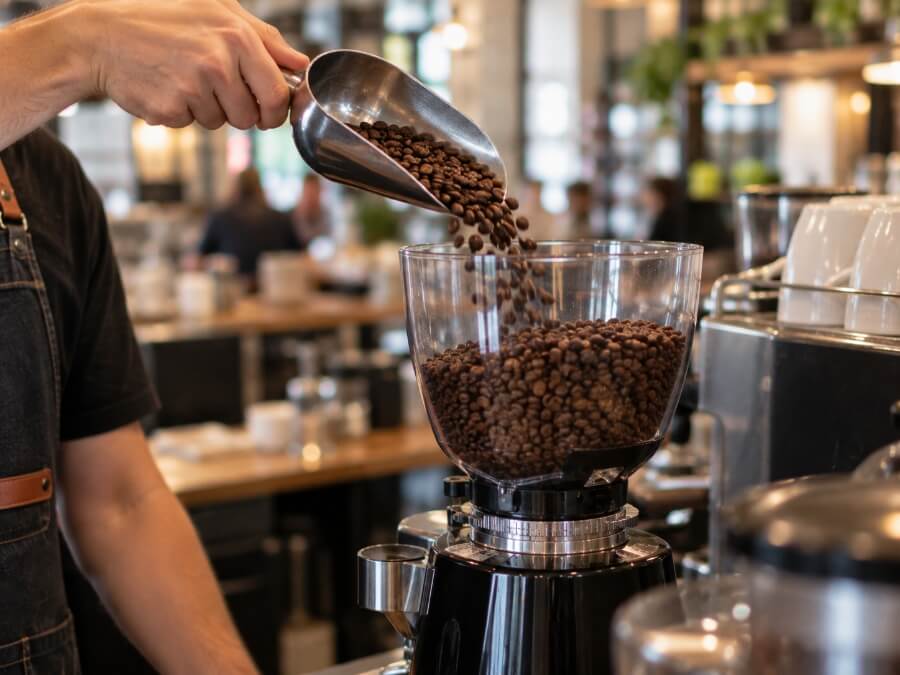
Behind the glass at the back of the room sits a 12-kilo drum roaster that has been running since 1989. Every bean we pour or sell passes through it, twenty feet from where you sit.
Tue · Thu
roast days, before 11am — grab the booth by the glass
~1,400 lb
roasted each week
Farm to mug in four steps
Most of the work happens before the drum ever turns, and some of it after.
Sourcing
We cup samples from our nine partner farms each harvest, pick the lots we love, and agree on a price before the coffee leaves the farm.
Year-round
Roasting
Green coffee goes into Big Lou twelve kilos at a time. Each origin has its own profile, tweaked batch by batch and written down by hand.
Tue & Thu, 6–11am
Resting
Fresh-roasted coffee is full of CO₂. We rest it in valved bags — three days for filter, a full week for espresso — before it hits the bar.
3–7 days
Brewing
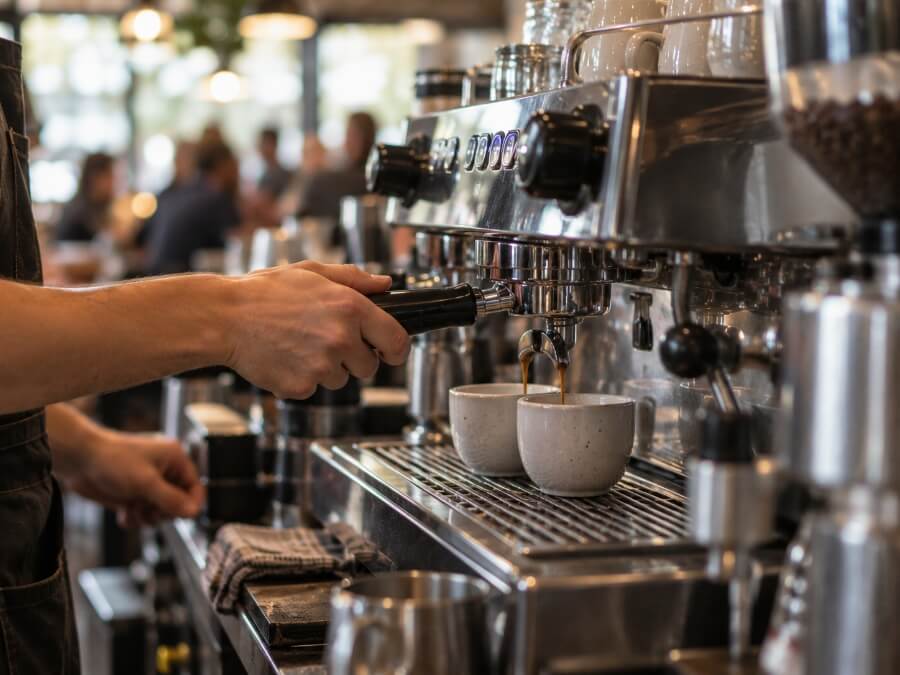
The bar dials in espresso every morning and again after lunch, and reports back to the roaster when a batch tastes off.
Dialed twice daily
Meet "Big Lou."
Big Lou is a 1989 cast-iron drum roaster, bought used from a closing roastery in San Antonio and driven up I-35 on a borrowed flatbed.
It has been rebuilt twice, but the drum, the trier and the cooling tray are original. Marcus still logs every batch by hand alongside the software.
A secondhand Probat starts roasting in the corner of the sandwich counter.
Big Lou arrives from San Antonio. The roaster moves to its own room out back.
New burners and a rebuilt motor. Dolores refuses to replace the drum.
Afterburner, digital bean probes and the glass wall facing the booths.
Spec sheet
- Built
- 1989, cast iron
- Batch size
- 12 kg (26 lb)
- Fuel
- Natural gas
- Batch time
- 10–14 min
- Batches / roast day
- ~25
- Emissions
- Catalytic afterburner
- Logging
- Artisan + paper notebook
Nine farms, named on every bag
We buy direct, pay well above Fair Trade minimums, and go back to the same growers year after year.
Hambela Estate
Guji, Ethiopia
Washed heirloom lots that taste like peach tea. Our longest-running Ethiopian partner.
Partner since 2018 · 2,100 m
Gatomboya Co-op
Nyeri, Kenya
A 900-member cooperative famous for blackcurrant-bright SL28 and SL34.
Partner since 2019 · 1,800 m
Abakundakawa
Musasa, Rwanda
Women-led washing station producing clean, red-apple Bourbon.
Partner since 2021 · 1,900 m
Finca El Mirador
Huila, Colombia
Three generations of the Rojas family, now experimenting with honey processing.
Partner since 2018 · 1,750 m
Finca La Soledad
Huehuetenango, Guatemala
Half of our Side A blend. Chocolatey, bright and dependable every single year.
Partner since 2018 · 1,950 m
Fazenda Sol
Cerrado Mineiro, Brazil
Sun-dried naturals with hazelnut and milk chocolate. The other half of Side A.
Partner since 2020 · 1,100 m
Finca Santa Teresa
Chiriquí, Panama
Tiny lots of Gesha we buy one bag at a time for special releases.
Partner since 2023 · 1,600 m
Gayo Highlands Co-op
Aceh, Sumatra
Wet-hulled coffee with cedar and molasses. The backbone of Night Shift.
Partner since 2019 · 1,500 m
Doi Chaang Village
Chiang Rai, Thailand
Our newest partner — a hill-tribe community with a sweet, nutty Catimor.
Partner since 2024 · 1,400 m
Every batch gets slurped.
Cupping is how coffee gets judged everywhere, from farm to roaster. It is deliberately simple, so nothing hides behind the brew method.
- 1
Grind & smell — Eight grams of fresh grounds per bowl. We note the dry fragrance first.
- 2
Pour & wait — Hot water straight on top, then four minutes while a crust forms.
- 3
Break the crust — Push through the top with a spoon and lean in — this is where the aroma lands.
- 4
Slurp & score — Loud slurps spray the coffee across the tongue. Each cup is scored for sweetness, acidity, body and finish.
Public cupping every Thursday at 3pm at the communal table. Free, ten seats, first come.
Come behind the glass.
Ninety minutes with Marcus: green coffee, a live batch on Big Lou, a guided cupping, and a bag to take home. Twelve people per tour, ages 12 and up.
- First Saturday of each month, 9:00–10:30am
- $25 per person, includes a 12 oz bag
- The roast room is step-free; it is warm, so dress light
Sign up at the bar, call (512) 123-45678, or reserve a spot here.