Why we still roast in the same room you sit in
Fifty-two years of smoke alarms, neighbor complaints and one very patient fire marshal — and why we would not move the drum for anything.
 Marcus HaleHead Roaster
6 min read
The first complaint came in the spring of 1974, about six weeks after the doors opened. A woman from the apartments behind us knocked on the back door to say her laundry smelled like burnt toast. She was not wrong. The roaster back then was a secondhand Probat with a cracked chaff collector, and it vented straight into the alley.
We fixed the collector. We did not move the roaster. And every few years since, someone — an accountant, a landlord, a very well-meaning consultant — has asked the same question: why not roast somewhere else, somewhere cheaper, and truck the beans in?
The smell is the menu
Walk in on a Tuesday or Thursday morning and you will smell it before you see it. That smell is first crack: the point where the bean has dried out, turned brown, and starts to pop like popcorn. It is the most honest advertising we have.
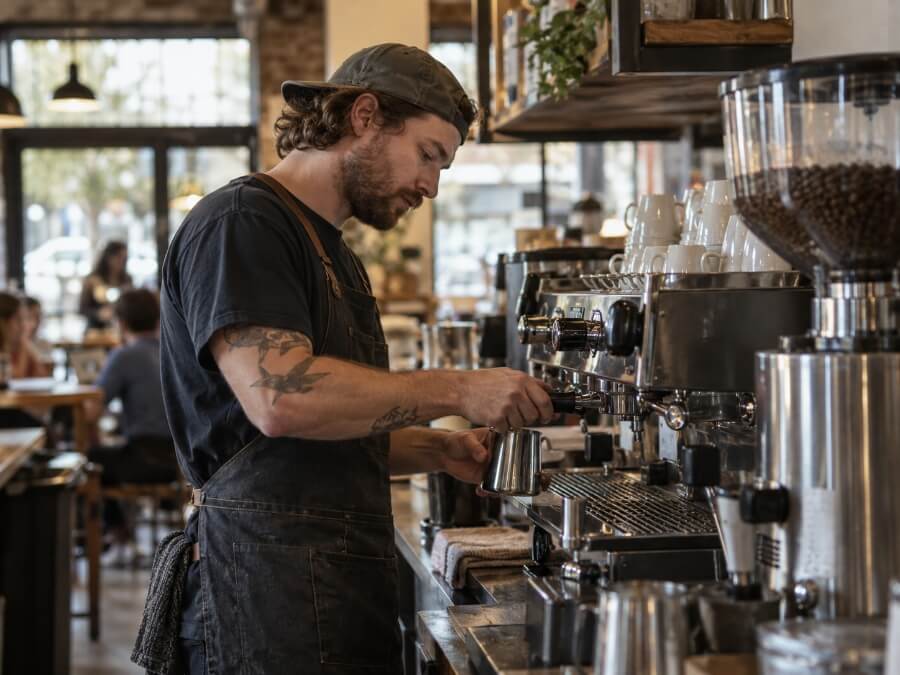
There is a practical reason too. Roasting where we brew means the people pulling your shots tasted the batch yesterday. When something is off, the barista walks twenty feet and tells Marcus.
If the person roasting it can’t see your face when you taste it, something gets lost.Dolores Vega, Owner
What it actually takes
Roasting in a dining room is not something the city loves to permit. Here is what we have had to do, roughly in the order we learned it the hard way:
- An afterburner on the exhaust, added in 1996, which cleans the smoke before it leaves the building.
- A separate electrical service just for the roaster, because the espresso machine and the drum cannot both pull at 7am.
- A glass wall between the roast room and the booths — so you can watch, and so the fire marshal can sleep.
- A roast schedule built around the room: Tuesdays and Thursdays, before 11am, never during Sunday vinyl.
How a batch goes
- Charge. Twelve kilos of green coffee drop into a drum preheated to around 400°F.
- Dry and brown. For about eight minutes the beans lose water and turn from green to yellow to cinnamon.
- First crack. The popping starts. From here, every thirty seconds changes the cup.
- Drop. The beans spill into the cooling tray, and the whole room turns to look.
Why we will not move it
We have run the numbers. A warehouse roastery would save us money on rent and insurance. It would also turn the people who make your coffee into people who receive boxes.
So the drum stays. Come in Tuesday or Thursday before eleven, grab the booth by the glass, and ask Marcus what he is roasting. You can also join a roastery tour on the first Saturday of every month.
Written by
Marcus Hale
Head Roaster · at The Retro since 2009
Runs the drum roaster out back and logs every batch by hand in the same notebook format used since 1989. Has visited seven of our nine farms.